What a Marine learned from the expedition he didn’t finish
The expedition Akshay Nanavati talks about with the most conviction is the one he didn’t finish.
He raised $1.1 million from scratch.
He trained for years.
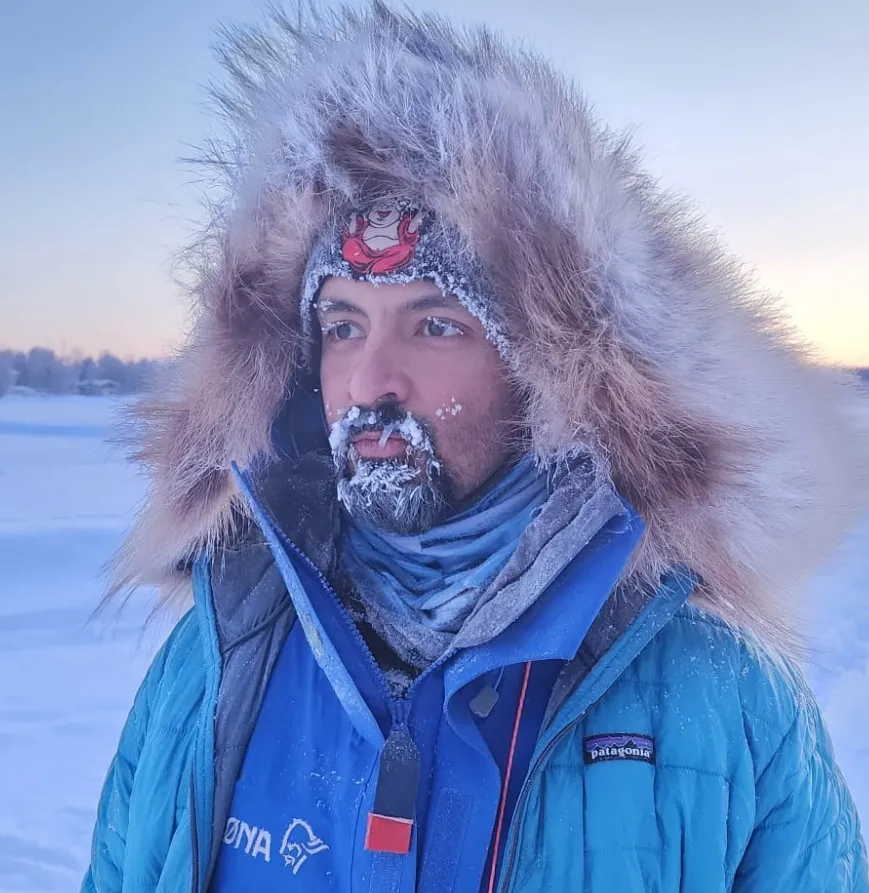
He stepped onto the Antarctic ice alone, hauling a 420-pound sled, attempting a coast-to-coast crossing without dogs or kites that had never been done, never even been attempted.
He cut the tag off his shirt to save a gram.
He cut his toothbrush in half to save five.
Roughly five hundred miles in, diverticulitis ended it.
Potentially fatal out there, and it had been fatal for another adventurer in Antarctica nine years earlier.
He came home without the crossing.
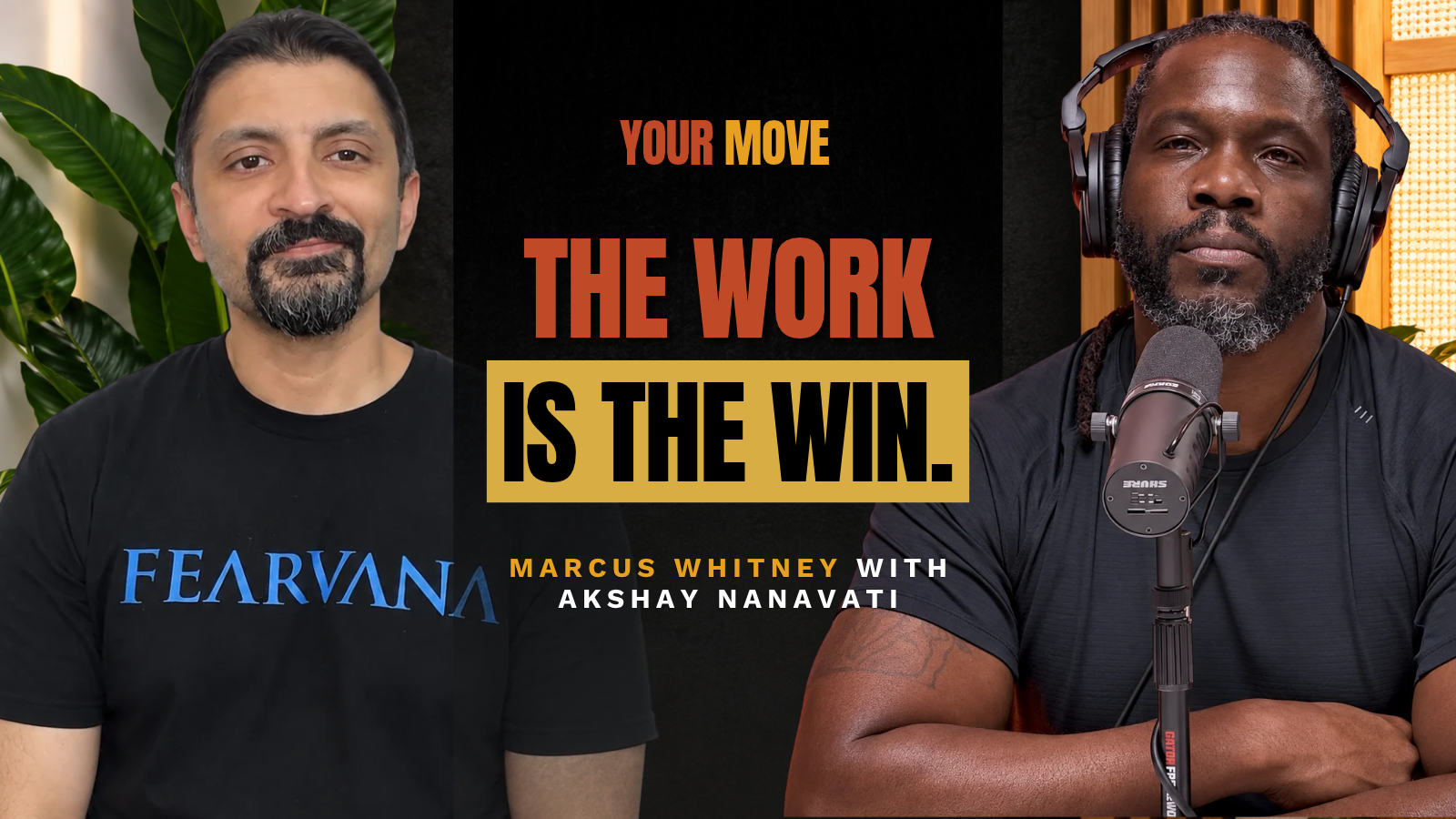
And when he sat down with me, he said the sentence that reframes the whole thing: “The summit is not the win. The work is the win.”
Two doctors said no
The pattern starts two decades before the ice.
Akshay was born in Bombay, moved through Singapore, and landed in Austin, Texas at thirteen. By his mid-teens he was deep into drugs and alcohol. What pulled him out was a scene in Black Hawk Down: two soldiers dying to protect a downed pilot.
His words: “The trigger that changed my path was recognizing I was living a selfish, meaningless, worthless existence.”
He decided on the Marine Corps. His body disagreed. Flat feet, scoliosis, a blood disorder that carries about twenty percent less oxygen. Two doctors told him boot camp would kill him.
He found a third doctor, fought for eighteen months, got his clearance, and graduated as the honor graduate of his infantry school platoon. In Iraq, his job was walking in front of vehicle convoys, hunting bombs.
The morning everything turned
He came home in 2008 carrying a brother who didn’t make it back, and the drinking climbed. One day became five. And there was a morning in his kitchen when he came seconds from ending his life.
What saved him was a strange and powerful noticing: the thought had arrived uninvited.
“I didn’t choose that thought.”
And if he didn’t choose it, something needed to change.
The moves that followed were small and deliberate.
He kept seeing his VA therapists, and he wants you to know they’re amazing human beings. He read everything: neuroscience, psychology, spirituality.
He kept the words post-traumatic stress and dropped the word disorder, because the research told him the condition his brain was in was changeable over time.
And he put a photo of his fallen friend on the wall with a sentence beneath it: “This should have been you. Earn this life.”
He turned grief into an assignment. Then came the sequence: ultramarathons, a 24-hour stair climb, a month crossing Greenland with a 190-pound sled, ten days in total darkness.
Each one evidence for the next.
What the ice teaches
Two of Akshay’s operating rules are worth remembering.
“There’s only two things in life you control, your actions and your attention.” Not the weather, not the diagnosis, not the economy. Actions and attention.
And when the thing in front of you is too big to comprehend: make your world small. On the ice that meant one step, one meal, one gram. Thirty days of flat white nothingness becomes survivable when your entire world is the next hour.
He also said something that I cannot stop thinking about: “Getting to the starting line was harder than Antarctica.” Three to four years of training. Raising the money from scratch.
The unglamorous part, the part nobody films, was the hard part.
The privilege of choosing
“It is a privilege to choose your own suffering. There’s many people in the world who do not have that luxury.”
Akshay has worked with survivors of sex trafficking, former child soldiers, people in poverty.
He knows the difference between chosen and unchosen suffering from both sides.
His argument is that the struggle you choose trains you for the one you don’t.
Difficulty is coming either way.
The only say you get is when you meet it, and on whose terms.
Your move
Maybe your move is enormous and public, your own version of the ice.
Or maybe it’s the smallest one on the list: booking the appointment, having the conversation, getting one honest day behind you.
A move doesn’t have to be big. It just has to be yours.
Listen to the full conversation with Akshay Nanavati wherever you get your podcasts, or watch it on YouTube. And when you make your move, tell me about it. I read every one.
Your move.